The Tarot of Jacques Viéville
(Paris c. 1650)

The Viéville majors are available at the boutique
Jacques Viéville is a pseudonym. Do consult the page devoted to this tradition of professional assumed names.
While working with Viéville’s deck, it was easy to envision a worker who engraved a copy of an existing printed sheet.
In 1661 a sort of war was raging between tax collectors and card-makers. At that time, taxes on cards represented a very high percentage of state revenue, even more than the “gabelle” being levied on salt. Everyone, people of all classes, played and bet on everything. Wagers of all kinds had been the rage for centuries. In the mid-17th century, Paris (composed of what is today only 6 arrondissements) had 4,000 gaming rooms. Cards were fragile, often discarded, and therefore represented an important market. To keep a better watch over them, card-makers were confined to a certain area of each town. They were under permanent surveillance by the police and tax agents. Workers were hand-picked and required to carry a pass.
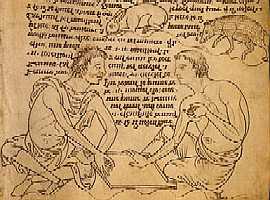
Dice players
The sheets of paper to be printed each day were counted by a bailiff before he brought them to the workshop. To prevent any smuggling of undeclared cards, the authorities had all the old wooden printing blocks erased. Armed with planes, the police invaded all card-makers’ ateliers on the same day. Everything had to be done over. To locate artisans capable of re-engraving ordinary playing cards was not too difficult. Finding expert engravers of tarot cards, however, was no easy task. To get a new production of tarots underway, it was necessary to improvise.
It seems likely that the engraver for Viéville “copied” this tarot in reverse, using the “right” side of an old printed sheet as model. All specialists are aware that almost all the Viéville images are “backwards”. Incredible amounts of speculation and theories have been produced to explain the esoteric meaning of these inversions. The probability is that the harsh commercial reality for Viéville made it necessary, if he wanted to salvage a tarot production without an old master-engraver at hand, to confer the project of re-engraving on a worker with no particular competence and no traditional knowledge of the tarot. Once printed, his direct copy of a “positive” sheet of course came out backwards! This did not, however, particularly trouble or disorient card players at that time.
For today’s purists, however, it’s another story. Our edition of the Viéville majors presents them as they appear in the original deck and includes a mostly reversed option as well. The best of both worlds?
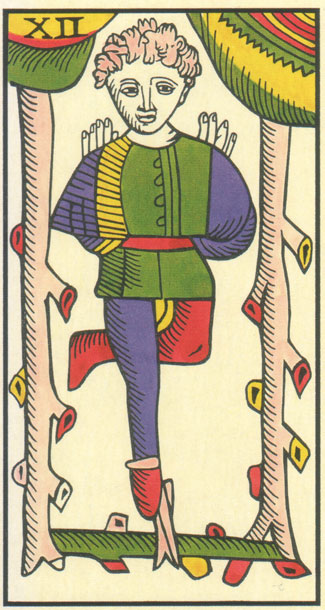
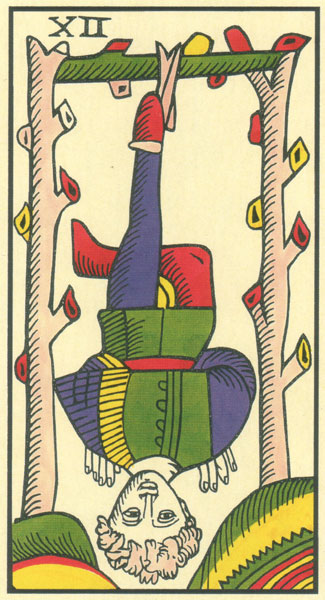
The original images from the French National Library can be seen on the following page.